Composite and wood are the two main paths for a new deck, and the right one comes down to how much upkeep you want and the look you are after. Here is how they compare for Bay Area homes.
If you are still deciding whether to build a deck at all, compare a deck with a patio for your Bay Area backyard before choosing boards.
What’s the difference between composite and wood decking?
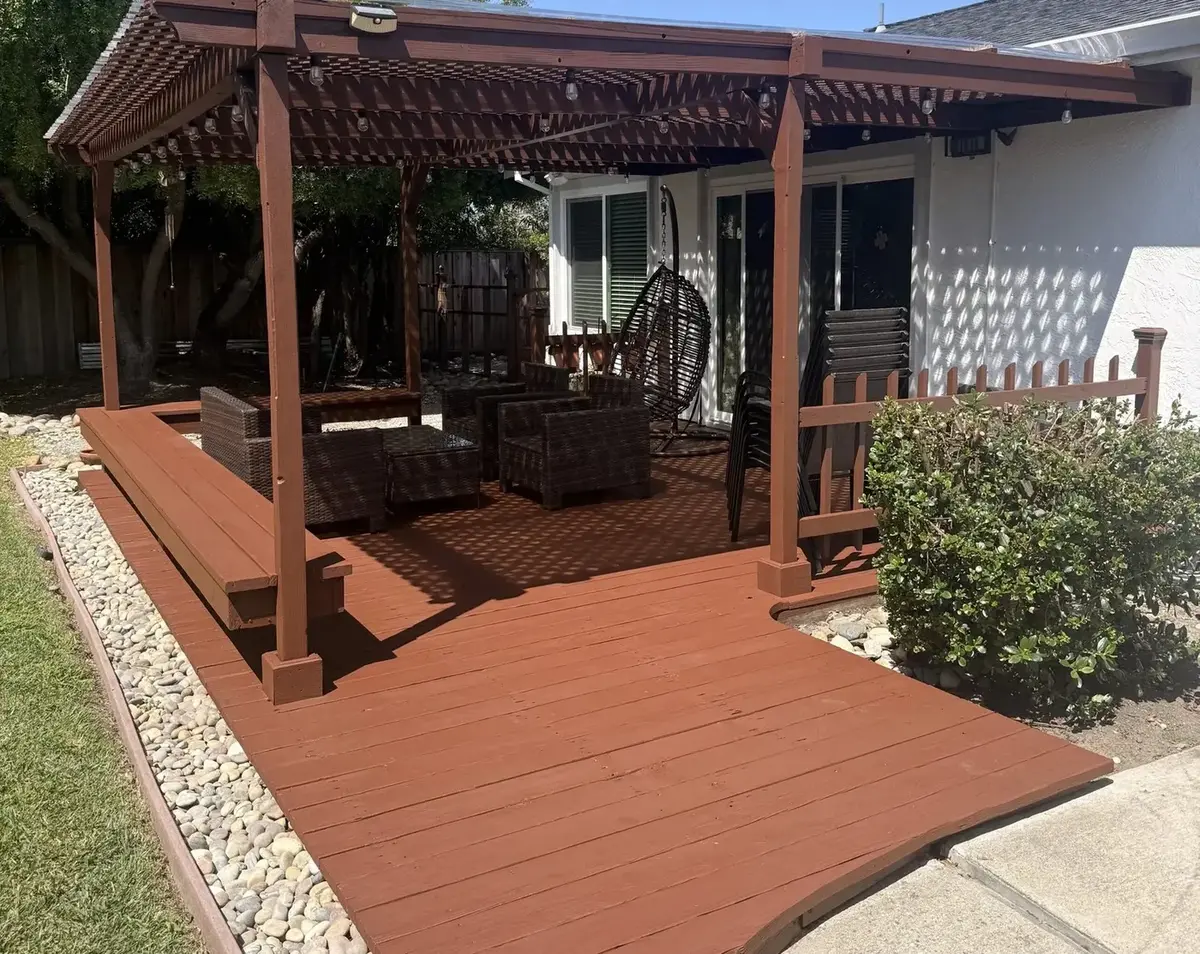
Wood decking is natural lumber, usually pressure-treated pine, redwood or cedar, milled into boards. Composite decking is a manufactured board, typically wood fibers blended with recycled plastic and capped with a protective shell. Wood gives you the real grain and the option to stain it any color you want. Composite trades some of that natural character for a surface built to resist rot, splintering and fading. Both can make a beautiful deck; they just ask for different things from you over the years.
Which decking lasts longer in the Bay Area climate?
Our climate is kind to decks compared with a snowy region, but summer sun and the damp of a wet winter still work on the boards. A wood deck holds up well when it is sealed and re-stained on schedule, and it will show its age faster if that upkeep slips. Composite is engineered to shrug off moisture and UV without that routine, so it tends to keep its look longer with less intervention. If you want a deck you can mostly leave alone, composite has the edge on longevity; if you enjoy the ritual of maintaining real wood, a well-cared-for wood deck rewards it.
How much maintenance does each one need?
This is the real dividing line. Wood needs periodic cleaning and a fresh coat of stain or sealer every couple of seasons to fend off moisture, gray-out and splinters. Composite usually asks for little more than a wash with soap and water to clear pollen, leaves and the odd spill. Neither is truly zero-effort, but composite is far closer to it. When homeowners tell us they are tired of re-staining, that conversation almost always ends at composite.
Which one looks better?
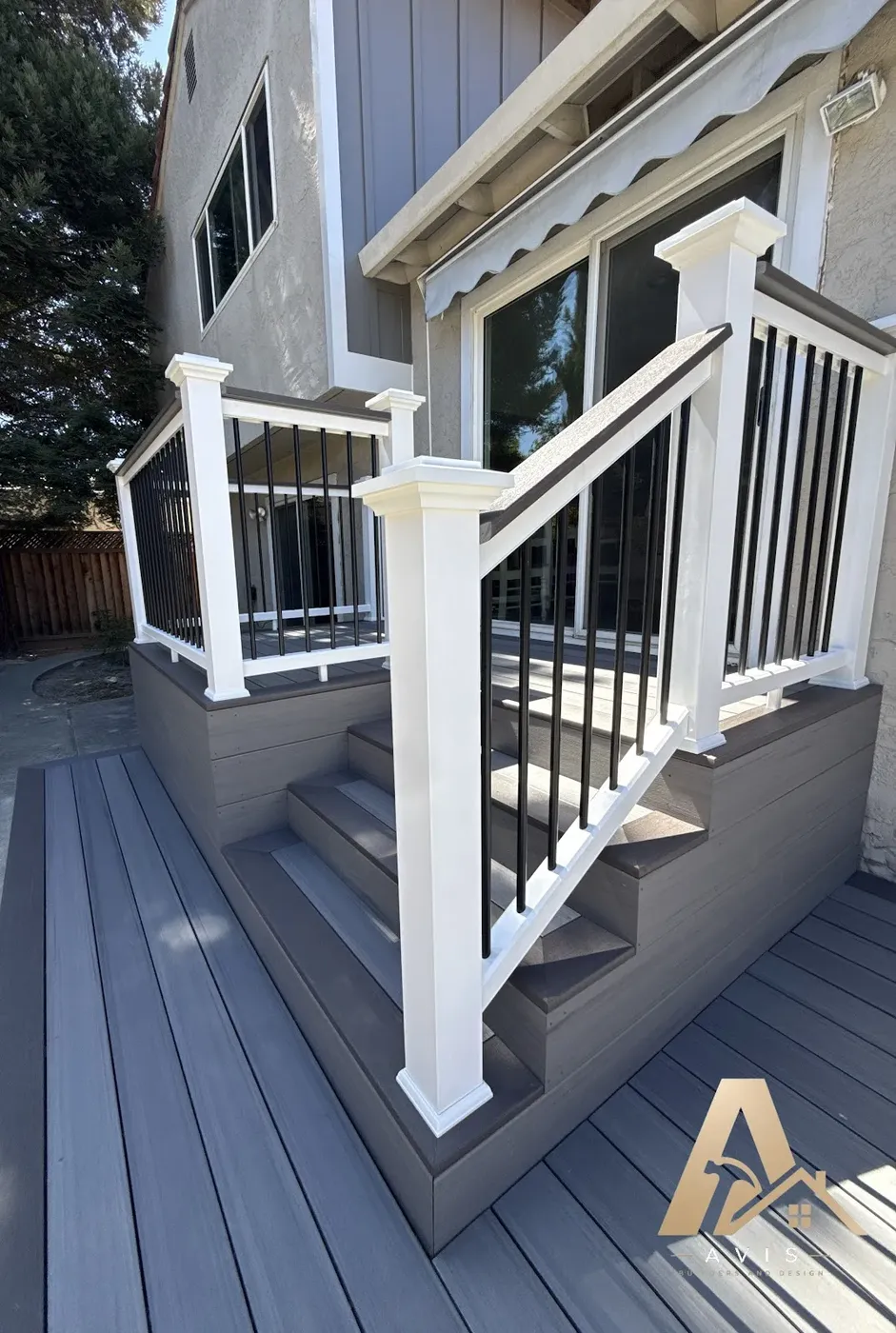
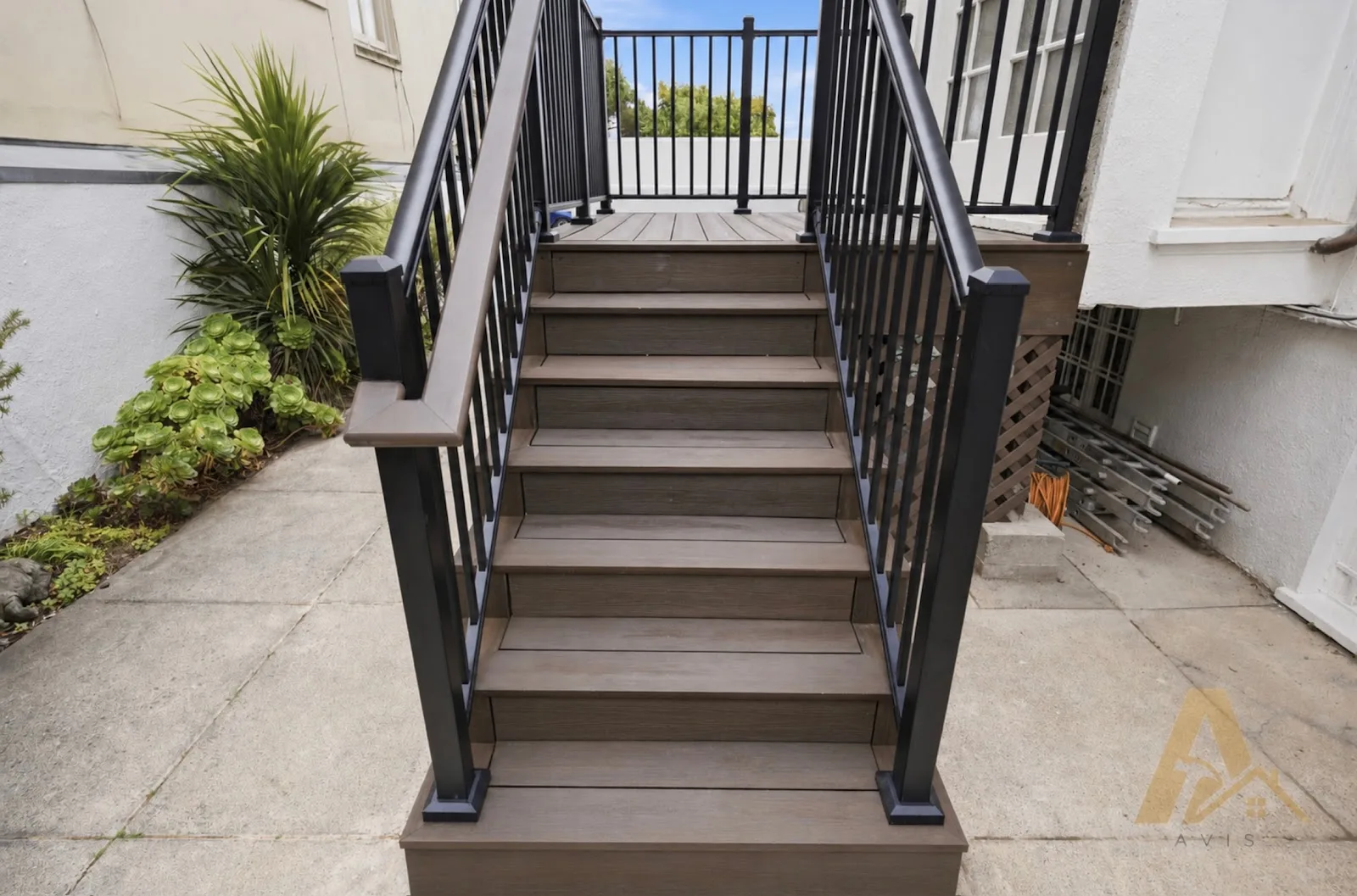
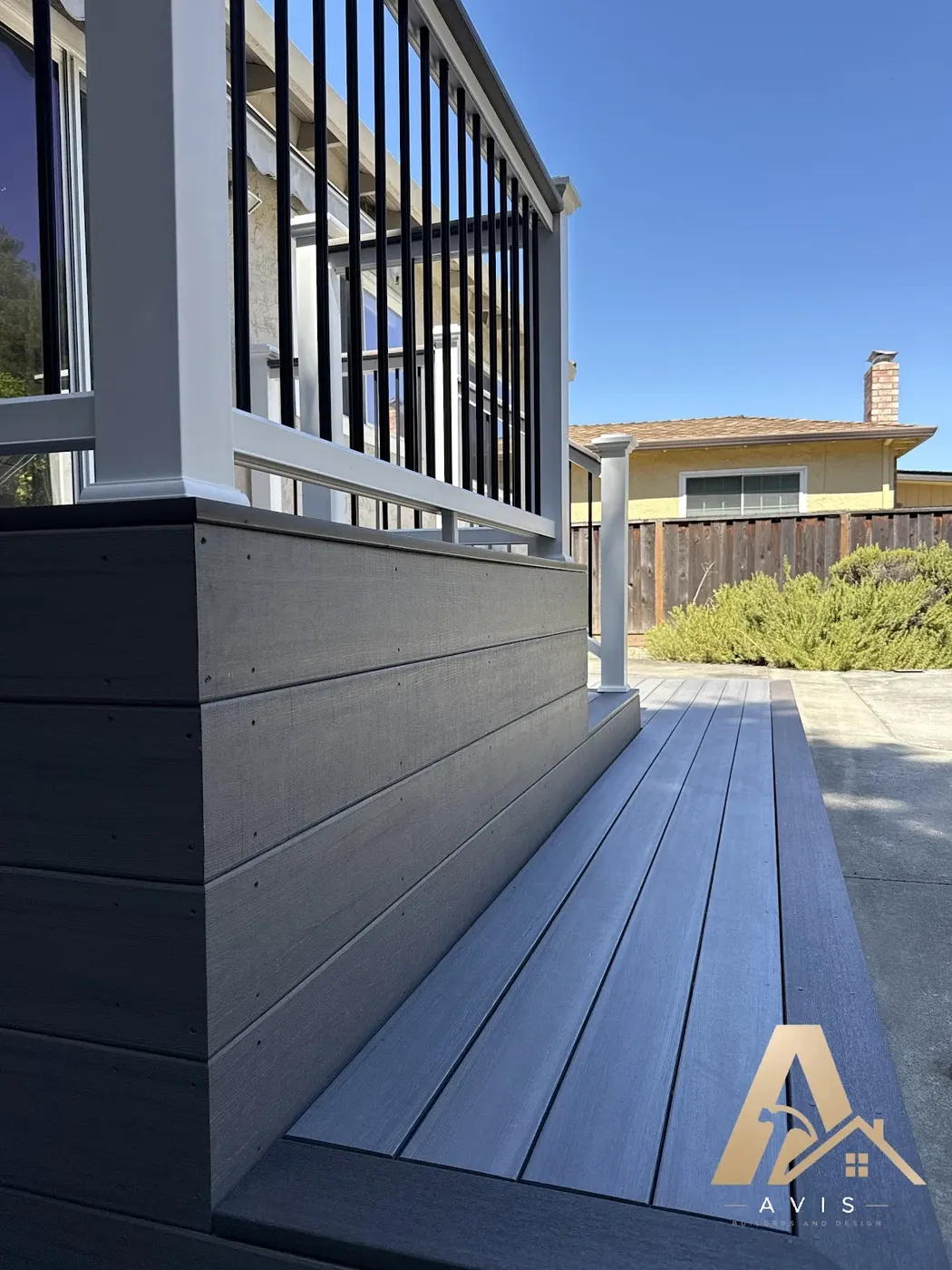
That comes down to taste. Nothing quite matches the grain of freshly stained redwood, and some homeowners want exactly that natural look against a Santa Clara Valley garden. Today’s capped composite has closed much of the gap, with multi-tone boards that read convincingly like wood from a few feet away and hold their color instead of graying. We bring samples so you can see both in your own light before you commit, because the right answer is the one that looks right on your house.
How do you choose between composite and wood?
Weigh three things: how the deck will be used, how much upkeep you want to sign up for, and the look you are after. A shaded deck used lightly can be a great home for wood; a big, sunny entertaining deck that you would rather not maintain leans composite. Budget matters too, and it is worth thinking about the full life of the deck, not just the boards, since a lower-upkeep surface changes what you spend attention and money on later. We build custom decks in both, so our job is to lay out the honest tradeoffs for your yard rather than push one material. Our deck building in San Jose service starts with a 3D plan of your space and a straight comparison of your options, and we handle the design, permits and build from there.
Frequently asked questions
Is composite decking better than wood?
Neither is simply better; they suit different priorities. Composite resists rot, fading and splintering and needs far less maintenance, which many Bay Area homeowners prefer for a large or sunny deck. Natural wood offers real grain and the freedom to stain it any color, and a well-maintained wood deck looks beautiful. The right choice depends on how you will use the deck, how much upkeep you want, and the look you are after.
Does composite decking get hot in the sun?
Any decking warms up in direct summer sun, and darker boards get warmer than lighter ones, whether they are composite or wood. Many capped composite lines are made with cooler surface technology to help with this. If your deck gets full afternoon sun, we can steer you toward lighter colors and cooler-rated boards during the material selection.
How long does a wood deck last compared to composite?
A wood deck that is cleaned and re-sealed on schedule can last for many years, while one that misses that upkeep ages faster. Composite is engineered to last longer with far less maintenance. Actual lifespan depends on the specific material, the exposure and how the deck is cared for, so we give you a realistic picture for the product you choose rather than a blanket number.
Can Avis Builders and Design build a deck with either material?
Yes. We are a licensed California contractor (CSLB #1142220) and build custom decks in both natural wood and composite across San Jose and Santa Clara County. We bring samples, explain the tradeoffs for your yard, and design and build the deck once you have chosen the material that fits.