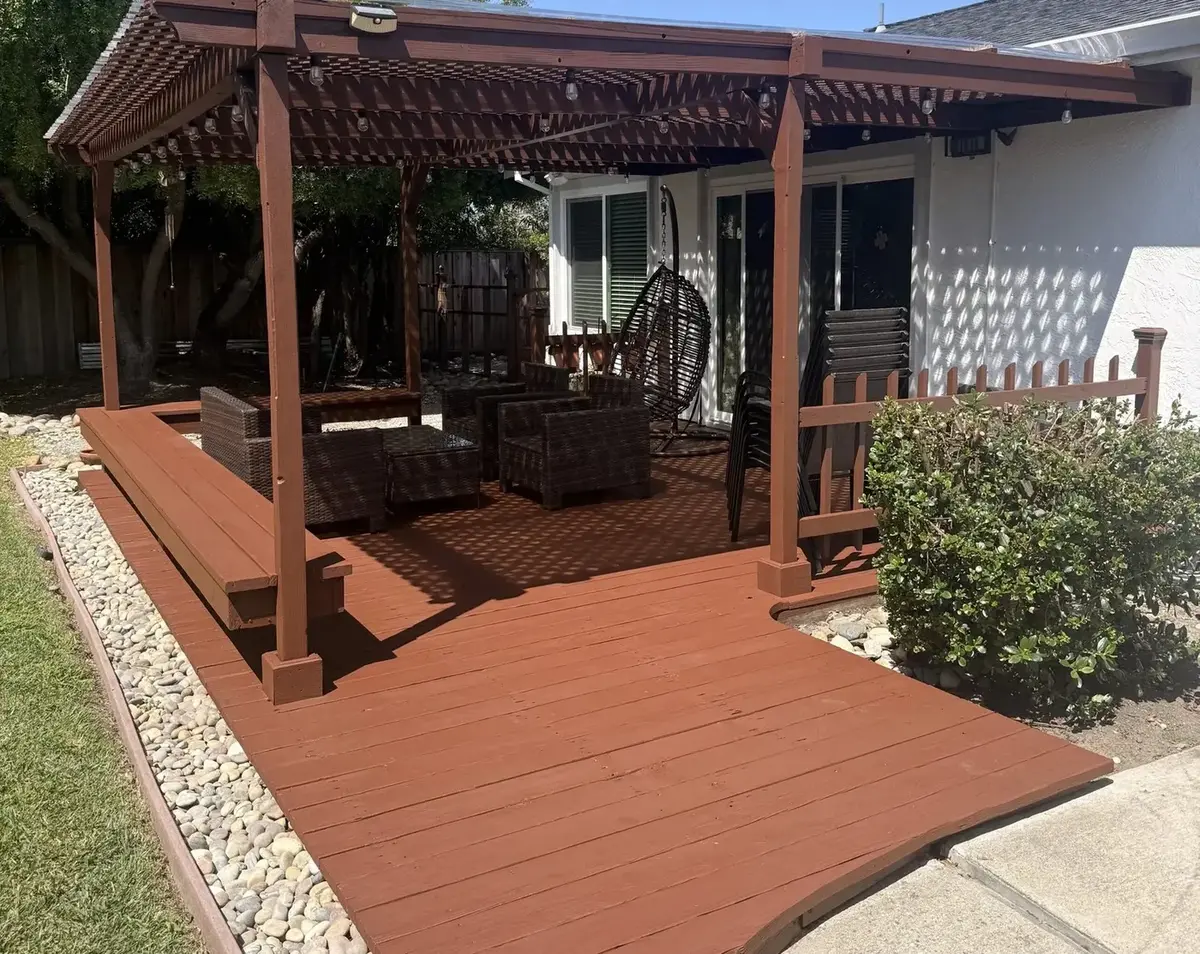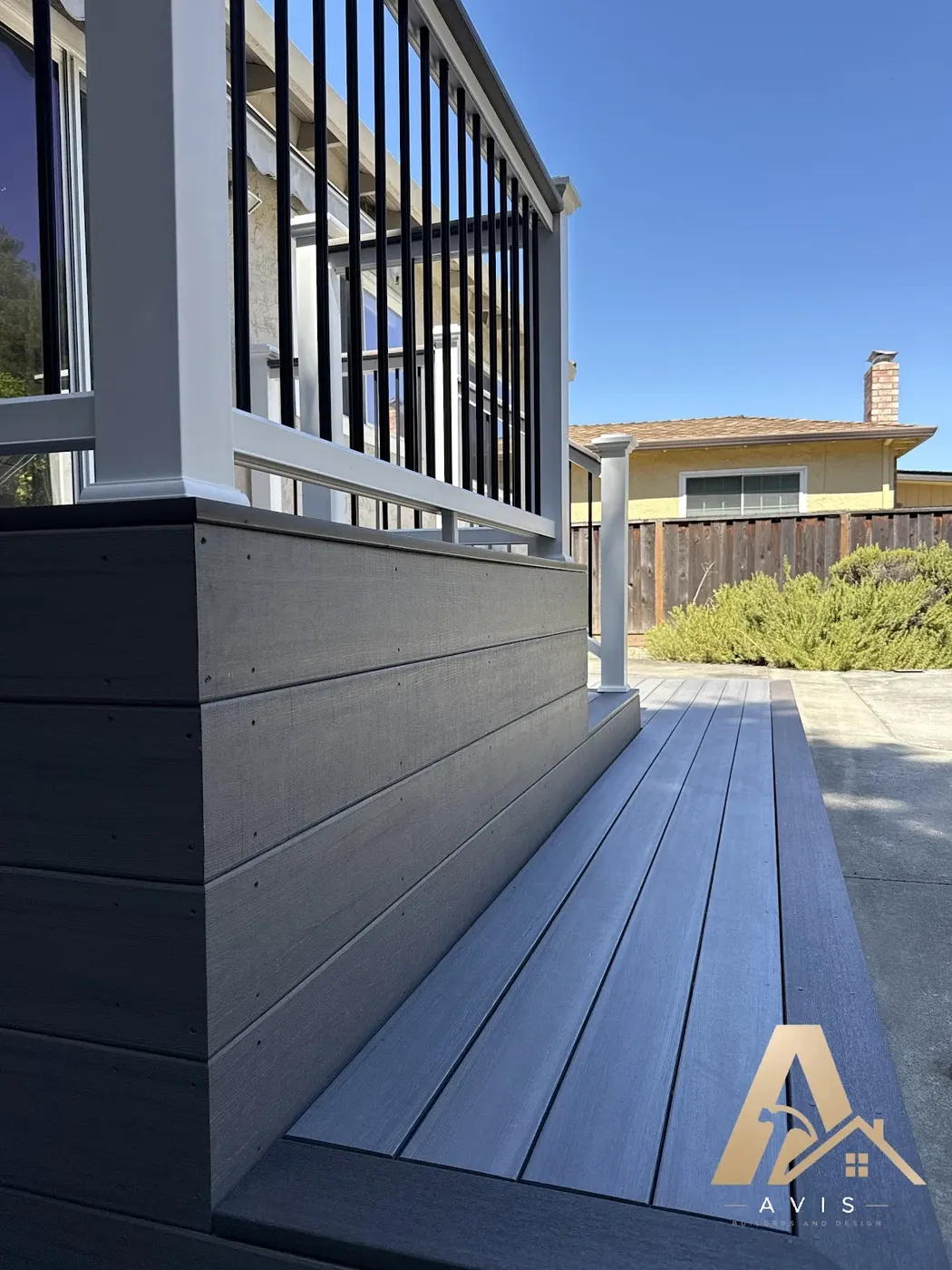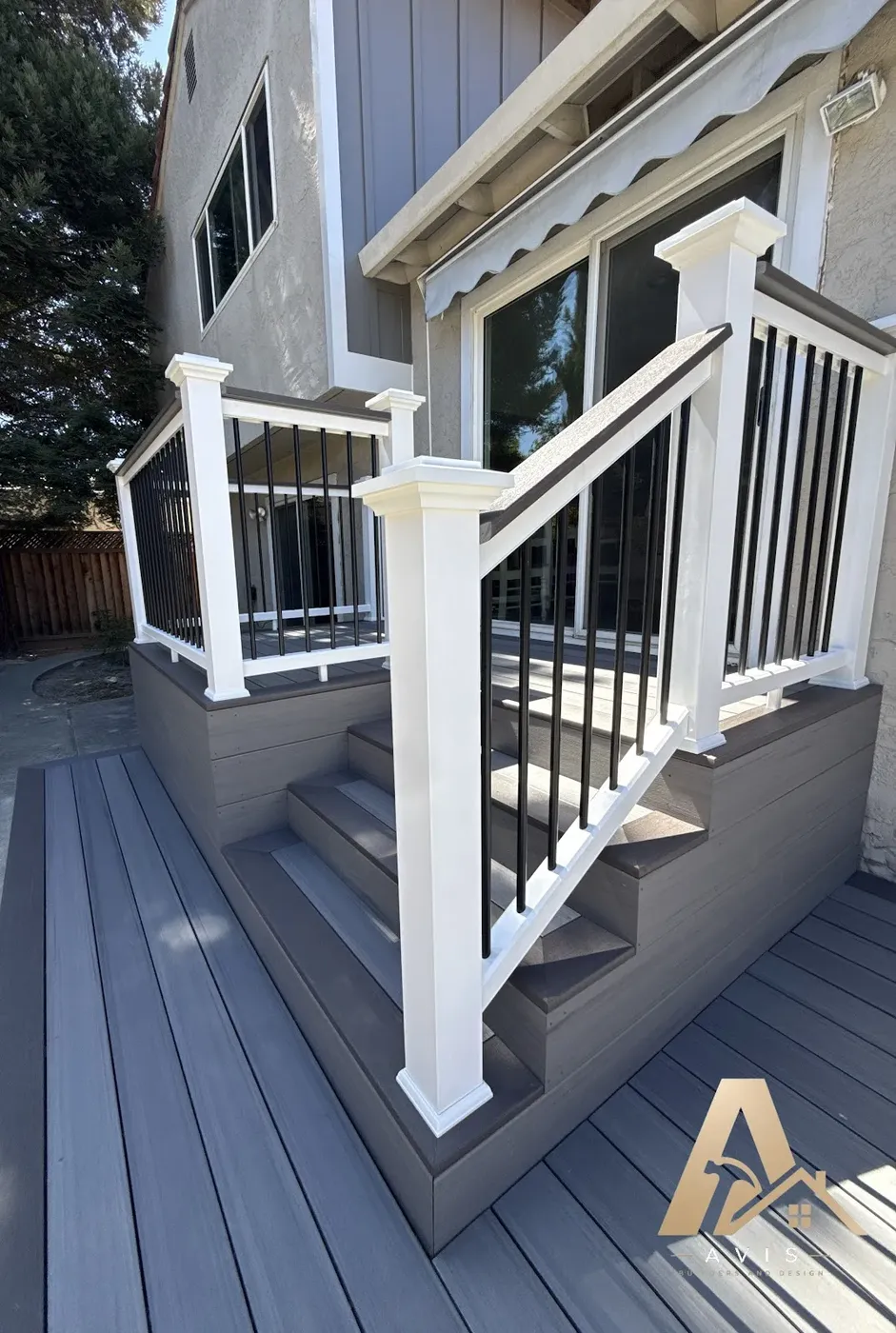
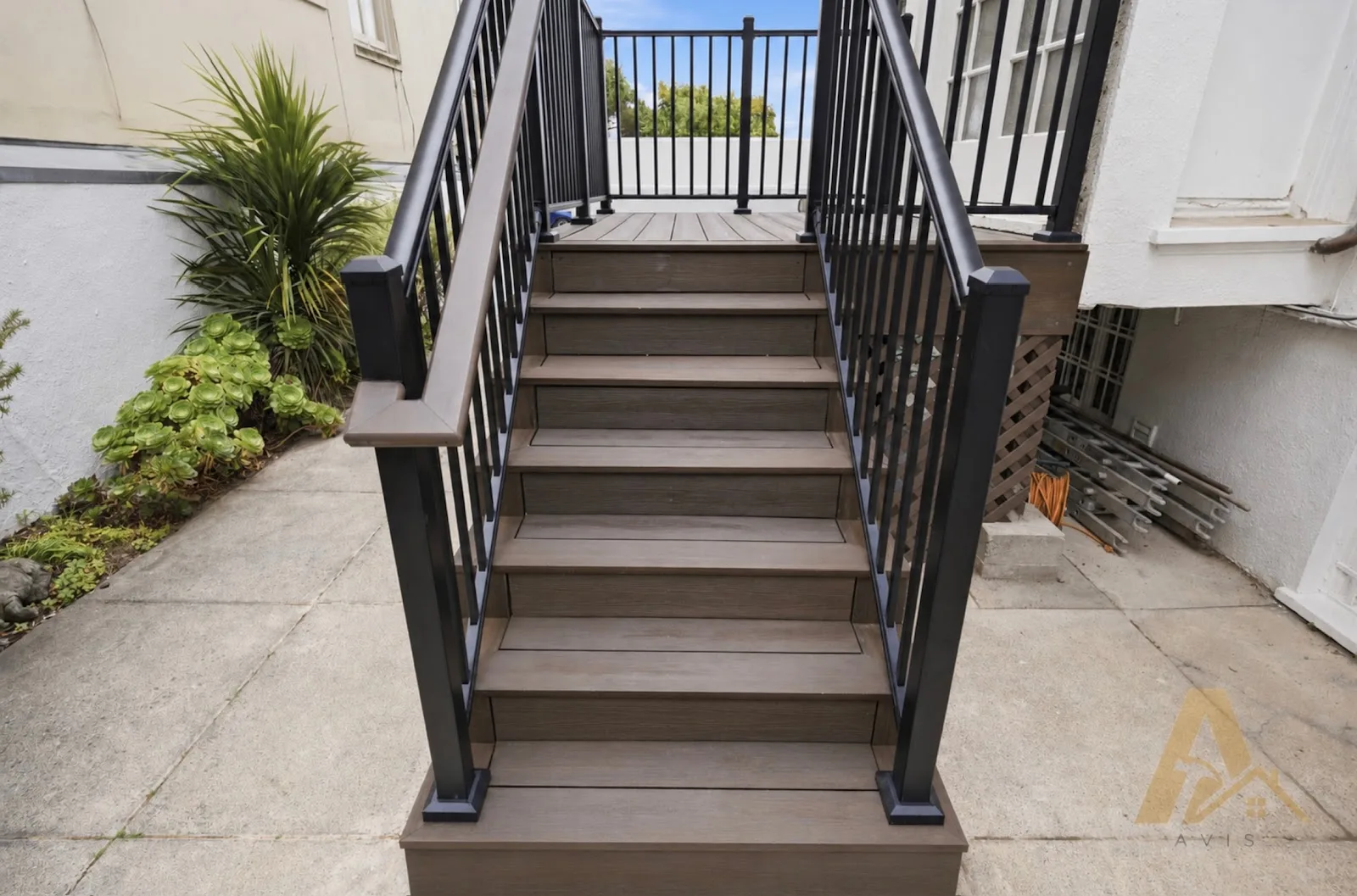
Trex and TimberTech are the two composite decking names most Bay Area homeowners compare. Here is how they differ on heat, looks, upkeep and warranty, and how to choose the right one for a Santa Clara County yard.
The short version
Both Trex and TimberTech are capped composite decking, built to outlast natural wood with far less upkeep. Trex is a capped wood-and-plastic composite. TimberTech, made by the AZEK Company, sells both a capped composite line and a capped polymer (PVC) line. For most South Bay decks the choice comes down to the look you want, how much direct sun the deck gets, and whether you want the extra heat and moisture resistance of PVC.
What Trex and TimberTech actually are
Trex boards are made from a blend of recycled wood fiber and plastic, wrapped in a hard protective shell, or cap, on the surfaces you see and touch. That cap is what resists fading, staining and mold, and it is why a capped composite holds up so much better than the uncapped composites sold years ago.
TimberTech is a brand of the AZEK Company. It offers capped composite boards similar in concept to Trex, and it also offers capped polymer boards with no wood fiber at all. Those PVC boards are lighter, stand up especially well to moisture, and tend to run cooler underfoot than dense composite because of what they are made from.
How they handle Bay Area sun and heat
Santa Clara County summers bring long, dry afternoons and strong sun. Any dark deck board gets warm in that sun, composite included. Lighter colors stay more comfortable, and TimberTech PVC boards generally run a little cooler than dense composite. If your deck faces full west sun with no cover, that difference is worth weighing, and a pergola or shade structure helps with either brand.
Looks and color
Both brands have moved a long way from the flat look of early composites. You can get multi-tonal, wood-grain boards in warm browns, grays and weathered tones from either line, along with matching railings, fascia and hidden fasteners for a clean finish. The palettes differ, so in practice the deciding factor is often which brand carries the exact color that suits your house.
Maintenance
This is where both brands clearly beat natural wood. There is no annual sanding, staining or sealing. A capped composite or PVC deck asks for little more than periodic sweeping and a wash with soap and water. That saved weekend, year after year, is a big part of why homeowners move to composite in the first place.
Warranty and how long they last
Both Trex and TimberTech back their capped boards with long limited warranties measured in decades, covering fade and stain. TimberTech PVC generally carries the brand’s strongest coverage because the material is fully synthetic. Warranty terms change and vary by product line, so confirm the current warranty for the exact board you choose before you commit.
Which should you choose for a Santa Clara County deck?
- Full-sun, low-shade yards: lean toward lighter colors, and consider TimberTech PVC for cooler boards.
- Damp or shaded lots, or decks nearer the bay: PVC’s moisture resistance is an advantage.
- A warm, natural-wood look with low upkeep: a mid-range capped composite from either brand delivers it.
- Matching an existing color or railing: pick the brand whose palette fits, since both perform well.
We build outdoor living spaces across the South Bay as a TREX PRO and TIMBERTECH PRO contractor, so we are not tied to one answer. On our deck building projects we walk you through both lines against your yard, your sun and the look you are after, and plan the whole deck in 3D before we build.
Frequently asked questions
Is Trex or TimberTech better for a hot, sunny deck?
Neither brand is heat-proof, but lighter board colors stay more comfortable underfoot than dark ones in either line, and TimberTech’s capped polymer (PVC) boards generally run a little cooler than dense composite. On a full-sun South Bay yard we usually steer homeowners toward a lighter color and often toward PVC, and pair it with a pergola or shade structure.
Do composite decks get too hot to walk on in summer?
Any deck board in direct afternoon sun gets warm, wood and composite alike. Color matters more than brand: light and medium tones are far more comfortable than dark ones. Shade from a pergola, an umbrella or the house makes the biggest difference on a hot Santa Clara County afternoon.
Is composite decking worth it compared to redwood?
It depends on what you value. Redwood costs less up front and gives a natural look, but it needs regular sanding, staining or sealing and it weathers. Capped composite and PVC cost more at the start and then ask for little beyond a wash with soap and water, and they hold their color for years. Homeowners who do not want annual upkeep tend to prefer composite.
Can you match composite decking to my house?
Yes. Both Trex and TimberTech offer wide, multi-tonal color ranges and matching railing systems, so we can pick boards that work with your siding, trim and the rest of the yard. We bring samples to your home so you see the color in your own light before anything is ordered.